
Comprehensive Guide to Industrial Gases: Understanding Argon and Its Applications

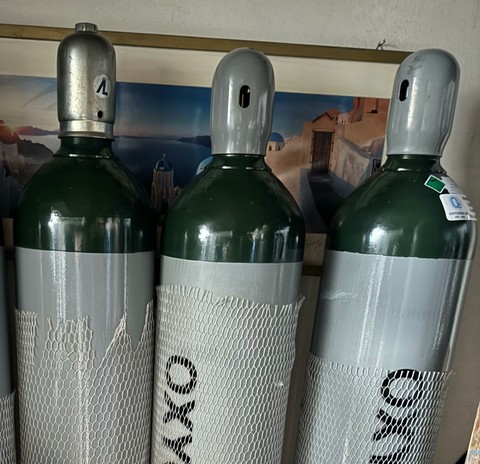
Introduction to Argon
Argon, a noble gas, is one of the most commonly used industrial gases across various sectors. Its unique properties make it invaluable for many applications, from manufacturing to scientific research. Understanding its characteristics and uses can enhance efficiency and innovation in industrial processes.

Properties of Argon
Argon is colorless, odorless, and non-flammable, making it a safe choice for many applications. It constitutes about 0.93% of the Earth's atmosphere, which makes it the third most abundant gas. Its inert nature means it doesn't react with other elements, providing a stable environment for sensitive operations.
One of the key properties of argon is its low thermal conductivity. This characteristic is particularly beneficial in processes that require stable temperatures, such as welding and certain types of manufacturing.
Argon in Welding
Argon is extensively used in welding, especially in processes like TIG (Tungsten Inert Gas) welding. Its inertness provides a protective atmosphere, preventing oxidation and other reactions that could compromise weld quality. This results in cleaner, more precise welds, which are crucial in industries like aerospace and automotive manufacturing.

Applications in Manufacturing
Beyond welding, argon plays a significant role in various manufacturing processes. It is used in the production of metals like aluminum and steel, where it helps to prevent oxidation and improve the quality of the final product. Its inert properties also make it useful in the production of semiconductors and electronics, where even minor impurities can cause significant issues.
- Metal production
- Semiconductor manufacturing
- Glass production
Scientific Research and Argon
In the field of scientific research, argon is used in various applications, including as a carrier gas in chromatography and as an inert environment for sensitive experiments. Its stable nature ensures that experiments are not affected by external variables, providing more accurate results.

Argon in Lighting
Argon is also used in lighting, particularly in fluorescent and incandescent bulbs. It helps to prolong the life of the filament by preventing oxidation. Additionally, argon is used in neon lights, where it produces a distinctive blue glow when electrified, contributing to the vibrant displays commonly seen in advertising and signage.
Environmental and Safety Considerations
While argon is non-toxic and non-reactive, handling it properly is essential to ensure safety. In confined spaces, it can displace oxygen, leading to asphyxiation risks. Therefore, understanding and adhering to safety protocols is crucial when working with argon in any capacity.
Argon’s environmental impact is minimal, as it is naturally occurring and does not contribute to greenhouse gas emissions. However, efficient use and recycling can further enhance its sustainability in industrial applications.